Baby + | Your Baby Tracker
- 4.7
- Rating
- 5.00M
- Installs
- Free
- Price

 Analysis by App-foxy
When I first tried Baby +, I approached it less like a typical parenting download and more like a digital notebook that needed to earn my trust. A baby tracker can hold intimate details about feeding, sleep, growth, and daily routines, so convenience is only half the story. The other half is whether I feel comfortable deciding what to record, when to record it, and how much of my family’s information belongs inside an app.
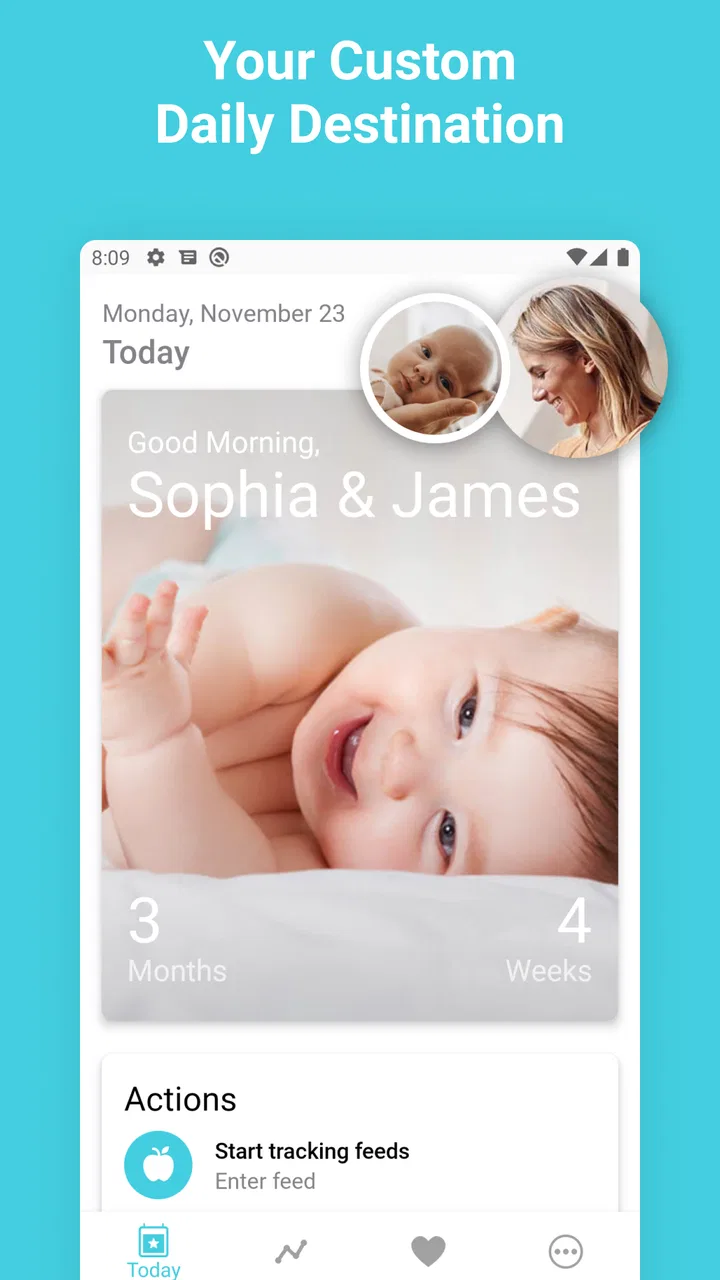
Baby + is a free parenting app from Philips Electronics UK Limited. It is designed around a baby’s growth, milestones, and breastfeeding, and its simple store summary, “Baby +,” does not tell the whole story of how it fits into everyday life. In my experience, its appeal is strongest when I want one place for recurring observations rather than scattered notes, memory, and messages to myself.
The app has reached over 5 million installs and holds a 4.6 average from around 98 thousand ratings. Those figures suggest that many parents find the basic idea useful, but popularity does not remove the need to examine the practical details. I paid particular attention to moments where a parent might enter sensitive information, the choices visible during normal use, and whether the app encourages helpful organization without making me feel watched or pressured.
You May Also Like

 AccuWeather: Weather Radar
AccuWeather Review: A Quick, Clear Forecast for Everyday Decisions
For everyday plans, the best forecast is the one you can understand quickly. AccuWeather makes rain timing, radar, and local conditions easy to act on, with a few trade-offs.

 Hill Climb Racing
Why Hill Climb Racing Still Turns Crashes Into One More Run
A tiny car, a bumpy hill and one more upgrade: Hill Climb Racing keeps resurfacing because its simple chaos makes every near-miss feel personal.

 AliExpress - Shopping App
AliExpress Makes Global Shopping Feel Personal, but Shoppers Bear the Risk
AliExpress turns a global marketplace into a pocket-sized discovery engine. Its reach is useful, its shopping loop compelling, and its trade-offs easy to miss.

 Lords Mobile: Kingdom Wars
Lords Mobile Is a Kingdom-Building Routine, Not a Quick Match
A case-by-case verdict on the building, battles, device demands, and social commitments that make Lords Mobile rewarding for some players and exhausting for others.

 PDF Scanner app - TapScanner
TapScanner Makes Paperwork Easier to Capture, Check, and Share
TapScanner makes scanning with a phone feel less like a rescue operation and more like a dependable step in getting work done. Its capture tools are useful, though not flawless.

 Block Blast!
 Shows How Much a Puzzle Game Can Leave Out
A quiet grid game shows why puzzle players increasingly value instant clarity, repeatable skill and low-pressure play—and where the genre still needs to catch up.
More From Our News Desk
View All News


How Baby + earns trust in ordinary parenting routines
I find Baby + earns trust most when I use it as a deliberate, small part of the day rather than treating it as a complete record of family life. Before making it a shared habit, I would agree with other caregivers on what counts as a confirmed entry and what should stay private. That simple boundary makes it easier to judge which settings and routines are genuinely worth keeping.
A focused tool rather than a complete family platform
The first thing I noticed is that Baby + makes most sense as a focused companion for baby-related tracking. It is not something I would use as a replacement for a pediatrician, a medical record, or a conversation with another caregiver. Its value is more modest and more realistic: it can help me remember patterns and milestones when tiredness makes everyday details blur together.
That distinction matters. Parents often need to remember whether a feeding happened, when a new behavior appeared, or what changed during a particular week. A dedicated tracker can make those observations easier to revisit than a general notes app. At the same time, I would not treat an entry as a diagnosis or as proof that a baby is developing normally. The app can organize what I enter; it cannot interpret a child’s health in place of qualified care.
The app is listed for Everyone and is free, which lowers the barrier for a parent who wants to test a routine without committing money first. It supports devices running Android 8.0 or later, and the current version is 3.2. That makes checking compatibility worthwhile before planning to use it across an older phone and a newer family device.
Why the developer matters here
Philips Electronics UK Limited is a recognizable developer name, but I still avoid turning that into a blanket promise about privacy or medical quality. A familiar company can make an app feel more credible, yet trust should come from the controls and explanations I can actually see while using it. For a parenting app, that means paying attention to account prompts, permission requests, privacy choices, and the wording around stored information rather than relying on branding alone.
I also think the large user base creates a particular expectation: the app should be understandable to a tired parent who has only one hand free. If a control is buried, a warning is vague, or an account decision feels rushed, the experience becomes less trustworthy even if the tracking concept is useful. Baby + works best when I treat it as a practical record-keeping tool and remain deliberate about the information I choose to place in it.
The best way to start without over-sharing
My recommendation is to begin with the smallest useful routine. I would record only the categories that solve a real problem for me, use the app for several days, and then decide whether the extra detail is worth the effort. This avoids a common trap with baby trackers: creating an elaborate system during a calm moment and abandoning it as soon as the night becomes difficult.
A short setup period also gives me time to notice what the app asks for before I make it part of family life. I would read each permission prompt instead of accepting everything automatically, and I would look for account or privacy settings before entering more personal details. That is not unnecessary caution; it is a sensible habit whenever an app may contain information about a child.
Controls I would check before making it a shared habit
The most important controls are the ones that affect access and visibility. I would check whether the app lets me manage an account without unnecessary information, whether there are clear options for changing or removing stored details, and whether another caregiver can use the same record without me handing over my entire phone. I would also look at notification settings, because a tracker should support my routine rather than interrupt it at unsuitable times.
I am careful not to assume that a particular control exists simply because it would be convenient. Instead, I would inspect the current interface and privacy information on my own device. App settings can change between releases, and the practical experience may differ by operating system. The useful principle is to verify each choice before relying on it: who can access the record, what the app wants from the phone, and how easily I can stop using a feature.
For families sharing responsibility, this check is especially important. A parent, grandparent, or partner may need the same information, but shared convenience should not mean uncontrolled access. If the available account arrangement does not match the family’s needs, I would keep the app as a personal log or choose a simpler shared method instead of forcing the wrong setup.
Permissions deserve attention at the exact moment they appear
Permissions are easiest to judge when I understand why they are being requested. If the app asks for access that seems related to a feature I am actively trying to use, I can make an informed decision. If the reason is unclear, I prefer to pause and review the explanation rather than grant access out of habit. A baby tracker does not automatically need every capability available on a phone.
I would revisit those decisions after an update, too. The app was released on July 29, 2016, but the current version is 3.2, and an older installation history does not tell me what the present experience looks like. Updates can alter screens, settings, or permission behavior. My practical rule is simple: after updating, I open the privacy and notification areas again instead of assuming that yesterday’s choices still describe today’s app.
Data-sensitive moments in real life
The most sensitive moment is not necessarily installation. It is the tired, emotional situation in which I am likely to enter more detail than usual. After a difficult feeding, a worrying night, or a sudden milestone, I may want to write down everything. That can be useful, but it is also when I am least likely to read a privacy notice carefully or question a new request for access.
For that reason, I would make the app’s routine as narrow as possible before those moments arrive. I might decide in advance which observations are genuinely useful and which are better kept out. I would avoid using names, identifying comments, or extra context unless I have a clear reason to retain them. A concise record is easier to review and reduces the amount of sensitive material sitting in one place.
Another important moment is showing information to a healthcare professional. A tracker can help me remember dates and patterns, but I would review the screen before sharing my phone. I would show only what is relevant, confirm that no unrelated personal details are visible, and explain that the entries are my observations rather than clinical measurements. This small habit protects privacy while keeping the app useful during an appointment.
A realistic night-time workflow
Imagine a parent awake after a feeding, trying to remember whether the previous entry was made. This is where a tracker can be more helpful than a paper notebook left across the room. I would open Baby +, record only the essential event, and close it immediately rather than browsing through every section. The goal is to preserve a useful memory without turning a short task into a second wake-up.
The next morning, I would review the record with a calmer mind. If the pattern seems important, I could discuss it with a partner or healthcare professional. If the entries are inconsistent, I would not panic or draw a conclusion from one night. Sleep deprivation makes both recording and interpretation imperfect, so the app should support reflection later, not encourage instant judgments at three in the morning.
Breastfeeding records need context
Breastfeeding tracking can be valuable because it gives me a prompt to remember an event that might otherwise disappear into a busy day. But the record should not become a source of guilt. Missed entries, approximate times, and days that do not follow a tidy pattern are normal realities of caring for a baby. I would use the feature to support memory, not to grade myself.
I would also be cautious about reading too much into the history. A sequence of entries may help me describe what happened, but it does not by itself answer whether feeding is adequate or whether a change is medically significant. If something concerns me, I would take the record to a qualified professional and ask for guidance. That is a strength of organized notes, not a reason to let the app make health decisions.
Growth and milestones: useful memory, limited authority
Growth and milestone information can become a meaningful family record. I like the idea of being able to look back at when a new skill appeared or how a period of change unfolded. It can also help me prepare questions for a pediatric visit, especially when I remember that something changed but cannot recall exactly when.
Still, I would keep expectations realistic. A tracker is not a substitute for standardized assessment, and a milestone entry is not a pass-or-fail result. Babies develop at different rates, and a parent’s observation may be approximate. The app is most helpful when it helps me communicate clearly, not when it encourages comparisons with other children or makes normal variation feel alarming.
Keeping control when several people care for the baby
Family coordination is one of the strongest reasons to use a dedicated tracker, but it is also where user agency can become complicated. Before inviting anyone else into a routine, I would agree on what each person should record and how we will handle corrections. Without that agreement, the history can become confusing: one caregiver may enter an event immediately, another may add it later from memory, and both may appear equally certain.
I would establish a simple convention, such as recording only confirmed events and making a note when a time is approximate. I would also decide who is responsible for reviewing the record. This prevents the app from becoming a silent source of disagreement and keeps the focus on caring for the baby rather than maintaining perfect data.
If Baby + does not offer the exact sharing or editing controls my household needs, I would not treat that as a failure of parenting. A paper sheet, a private family note, or a different app may be better for a household that needs transparent collaboration. The right tool is the one that reduces friction without creating a new privacy or coordination problem.
How it compares with simpler alternatives
A general notes app is more flexible and may feel safer for someone who wants complete control over wording and storage choices. It is also easier to make messy. A notebook avoids another account and keeps the information offline, but it can be hard to search, easy to misplace, and inconvenient when I am holding a baby. Baby + sits between those options: more structured than free-form notes and more convenient than paper, while requiring me to accept the app’s way of organizing the experience.
A spreadsheet offers detailed customization, especially for parents who want their own columns or calculations. I would choose that route if I needed unusual fields or wanted to manage several children with a precise personal system. The trade-off is setup and maintenance. Baby + is the better fit when I want a ready-made parenting workflow and do not want to design a database during the newborn stage.
The app also differs from a medical portal. A medical portal is the appropriate place for clinician-provided records, official results, and professional communication. Baby + is better suited to personal observations and everyday reminders. I would use both only if I understood the boundary between them, never assuming that a private tracking entry automatically becomes part of a healthcare record.
Where the experience may create friction
The biggest limitation of any detailed tracker is the effort required to keep it current. A system that looks helpful on a quiet afternoon can feel burdensome during cluster feeding, travel, illness, or a night with repeated wake-ups. If I find myself thinking more about entering information than caring for the baby, I would reduce the routine immediately.
There is also a risk of false precision. A timestamp can look authoritative even when I entered it from memory, and a neat history can make an unpredictable day seem more measurable than it really is. I would mark approximate information honestly where the app allows it, and I would avoid filling gaps just to make the timeline look complete.
Parents who want a completely offline, paper-first routine may dislike the idea of storing baby information in an app at all. Likewise, someone looking for advanced medical analysis, professional monitoring, or a highly customizable family database may be better served elsewhere. Baby + is most convincing for everyday organization, not for replacing clinical tools or satisfying every specialized workflow.
Who I would recommend it to
I would recommend Baby + to a parent who wants a dedicated place for baby observations, especially when remembering feeding, growth, and milestones is harder than expected. It is also a reasonable starting point for someone who wants to try a free tool before deciding whether structured tracking genuinely improves daily life.
I would be more cautious about recommending it to a family that has strict offline requirements, needs complex multi-user permissions, or expects the app to interpret health information. In those cases, I would first inspect the available controls and compare them with a notebook, a general notes tool, or a healthcare-specific service. Convenience should not outweigh a clear mismatch with the family’s privacy or clinical needs.
My cautious verdict after using it
Baby + succeeds when I use it as a lightweight memory aid rather than an authority. Its parenting focus makes more sense to me than forcing baby information into a generic productivity app, and its free access makes experimentation easy. The strong rating and broad adoption add reassurance that the concept works for many families, but they are not a replacement for checking permissions, account choices, notifications, and privacy settings personally.
My best advice is to start small, record only what you will actually use, and review the app’s visible controls before adding sensitive detail. Keep healthcare decisions with healthcare professionals, and do not let an imperfect log create unnecessary anxiety. The real value is not collecting every possible fact; it is giving you a clearer, calmer way to remember the facts that matter.
For me, that makes Baby + worth trying for parents who want structure without building their own system. I would keep it only if it saves time and improves conversations with the people caring for the baby. If it starts demanding more attention than it returns, switching to a simpler method is not giving up—it is choosing the tool that better respects both family routine and personal control.
FAQs for Baby + | Your Baby Tracker
01What features does Baby + offer for new parents?
Baby + offers a comprehensive suite of features designed for new parents, including tracking tools for feeding, sleeping, and diaper changes. It also provides personalized tips and interactive growth charts. The app includes a parenting guide with expert advice and a photo album to capture precious moments.
02Is Baby + available on both Android and iOS platforms?
Yes, Baby + is available for download on both Android and iOS platforms. Users can easily find the app in the Google Play Store and Apple App Store, ensuring accessibility regardless of the device you use. It provides a seamless experience across different operating systems.
03Does Baby + require an internet connection to function?
While Baby + can operate without an internet connection for most basic features, such as logging feedings and diaper changes, some features like personalized content updates and syncing across devices require internet access. It’s best to connect periodically to take full advantage of all features.
04Is the Baby + app free to use, or are there in-app purchases?
Baby + is free to download and use, providing a variety of essential features at no cost. However, it does offer optional in-app purchases for additional features and content. These may include premium guides or advanced tracking tools, designed to enhance the user experience.
05How secure is the personal data I enter into Baby +?
Baby + prioritizes user privacy and security. The app uses encryption to protect personal data and complies with data protection regulations. Users can feel confident that their information, such as baby’s milestones and personal logs, is stored securely and accessed only by them.
Pros
- Intuitive interface for easy navigation.
- Tracks baby’s growth and milestones.
- Daily tips for parenting guidance.
- Personalized content based on baby's age.
- Supports multiple profiles for siblings.
Cons
- Ads can be intrusive at times.
- Occasional syncing issues with devices.
- Limited features in the free version.
- Some data entry can be time-consuming.
- Requires internet for full functionality.

Baby + | Your Baby Tracker
Gallery